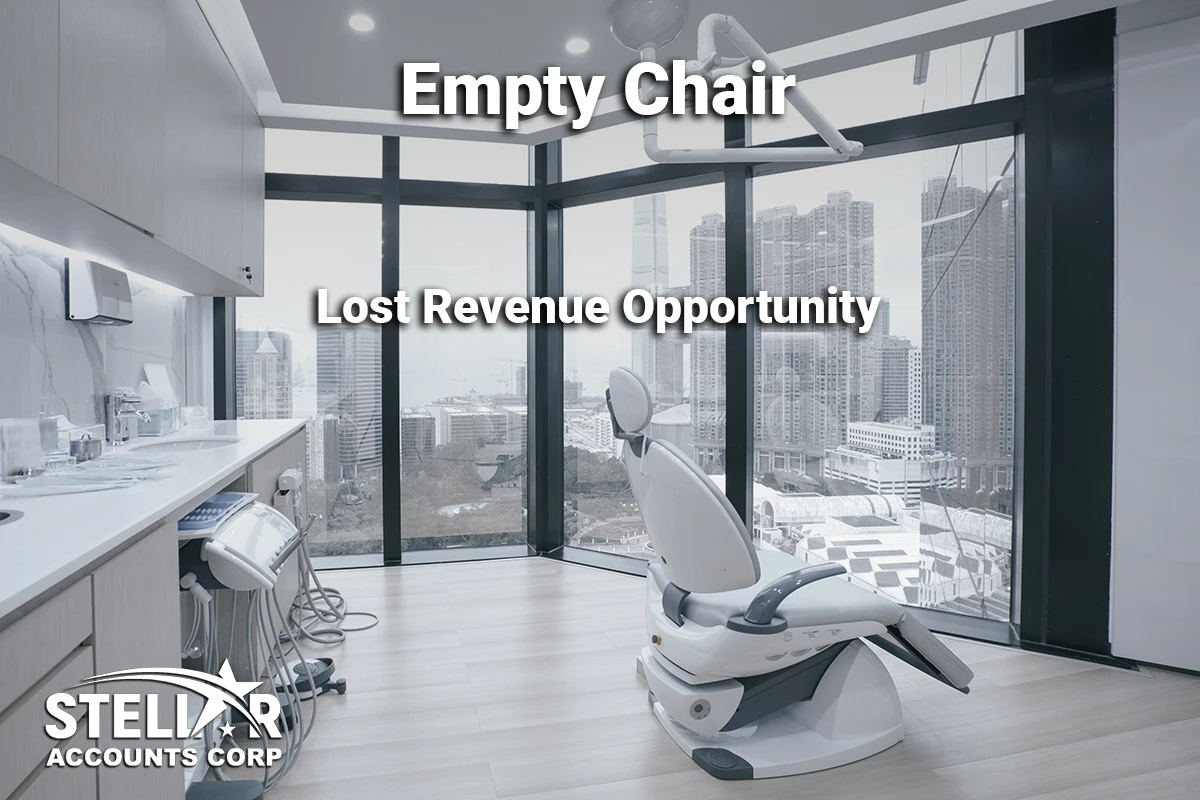



Turn your hygiene department from a staffing challenge into a profit engine with data-driven scheduling built for BC dental practices.
Your hygiene department should be your practice’s profit engine, not a staffing headache. Learn how to build a data-driven schedule that balances production goals, patient flow, and team wellness.
💡 Key Takeaway: A profitable hygienist schedule starts with accurate forecasting based on past collections, maintains a 33% or lower payroll ratio, and prevents burnout through strategic patient flow management. Use data, not guesswork, to build your ideal schedule.
From Lost Hours to Predictable Profit
If your hygiene chairs ever sit empty — even for an hour — you already know the pain of watching production slip away.
But here’s the truth most British Columbia dental owners don’t realize: profit protection starts long before cancellations happen.
It starts with how your hygienist schedule is designed.
At Stellar Accounts, we’ve reviewed hundreds of BC dental practices. Again and again, we see the same pattern: excellent clinicians with loyal patient bases still lose thousands each month simply because their hygiene schedules aren’t engineered for balance, flow, and profit.
A smart schedule doesn’t just fill chairs. It creates financial consistency, team harmony, and steady growth.
This guide will show you, step by step, how to build a hygienist schedule that protects profit, reduces burnout, and keeps your team aligned around predictable, sustainable performance.
Why Most BC Dental Practices Struggle with Hygiene Scheduling
Walk into any dental practice struggling with profit margins, and you’ll likely find one thing in common: a hygiene schedule built on habit or hope rather than data.
Some offices overbook hygienists to the point of exhaustion, believing more patients equals more production. Others underbook to “play it safe,” quietly bleeding thousands in lost billings each month. Neither approach works.
Here’s what that imbalance leads to:

The good news? A profitable hygiene department doesn’t require expensive software or consultants — just a disciplined, data-driven approach to three simple metrics:
- Your historical performance (collections and hours worked)
- Your target production goals based on the BCDA Fee Guide
- Your hygiene payroll ratio, which must stay under 33%
Understanding BC’s 2025 Dental Economics
The BC Dental Association (BCDA) updates its fee guide every February. These figures shape every schedule and payroll decision you make.
💡 To maintain a 33% hygiene payroll ratio, a $48/hour hygienist must produce at least $145/hour — about $1,300 daily scheduled production.
That’s your break-even point. But to protect against cancellations, your scheduled production should target 10–15% higher — about $1,300–$1,350 per day per hygienist.
This is the foundation of your financial stability. Every schedule decision should build upward from these numbers.
| 🪥 Adult Recall |
|---|
(Fee): ~$165
2 units scaling ($117.60) + polish ($47.60)
🩸 Perio Maintenance
(Fee): ~$283
4 units root planing ($235.20) + polish
💧 Fluoride
(Fee): $14 – $24
Fee depends on material and patient age.
👩⚕️ Hygienist Wages
(Fee): $46 – $52/hour
Vancouver average $48 – $50/hour
Step 1: Use Historical Collections — Not Hopes — to Set Targets
Before touching your schedule, pull the last 12 months of hygiene data from your practice management software (Dentrix, Cleardent, Tracker, etc.). Focus on collections, not production.
Average Hourly Production = Total Hygiene Collections ÷ Total Hygiene Hours Worked
This is your true efficiency rate — not production numbers.
Example
📈 Set a realistic stretch goal — 5 to 10 percent above your current level. That gives your team a clear, achievable path to improvement.
📉Don’t do this
Set arbitrary $200/hour targets because someone on Facebook said so.
Once you know your baseline, you can see exactly how much each scheduling adjustment (appointment type mix, hours, flex blocks) contributes to your bottom line.
Compare: Data-Driven vs Guesswork Scheduling
Step 2: Apply the 33% Payroll Rule
This single metric separates high-performing clinics from those constantly chasing cash flow.
Hygiene Payroll % = (Total Hygiene Payroll ÷ Total Hygiene Collections) × 100
Your goal: 33% or less.
💰Example (BC Wages 2025)
If you pay your hygienist $48/hour, they must produce at least $145/hour in collections.
Over an 8-hour day, that’s $1,164 — just to break even.
Schedule 10–15 percent higher ($1,300–$1,350/day) to absorb no-shows and maintain profit.
💡 Pro Tip: Create a one-page hygiene dashboard showing each hygienist’s weekly PPH (Production per Hour), Payroll %, and Utilization Rate. Most teams self-correct once they see their numbers.
Step 3: Build for Flow — Not Chaos
“Rhythm and revenue, not chaos and burnout.”
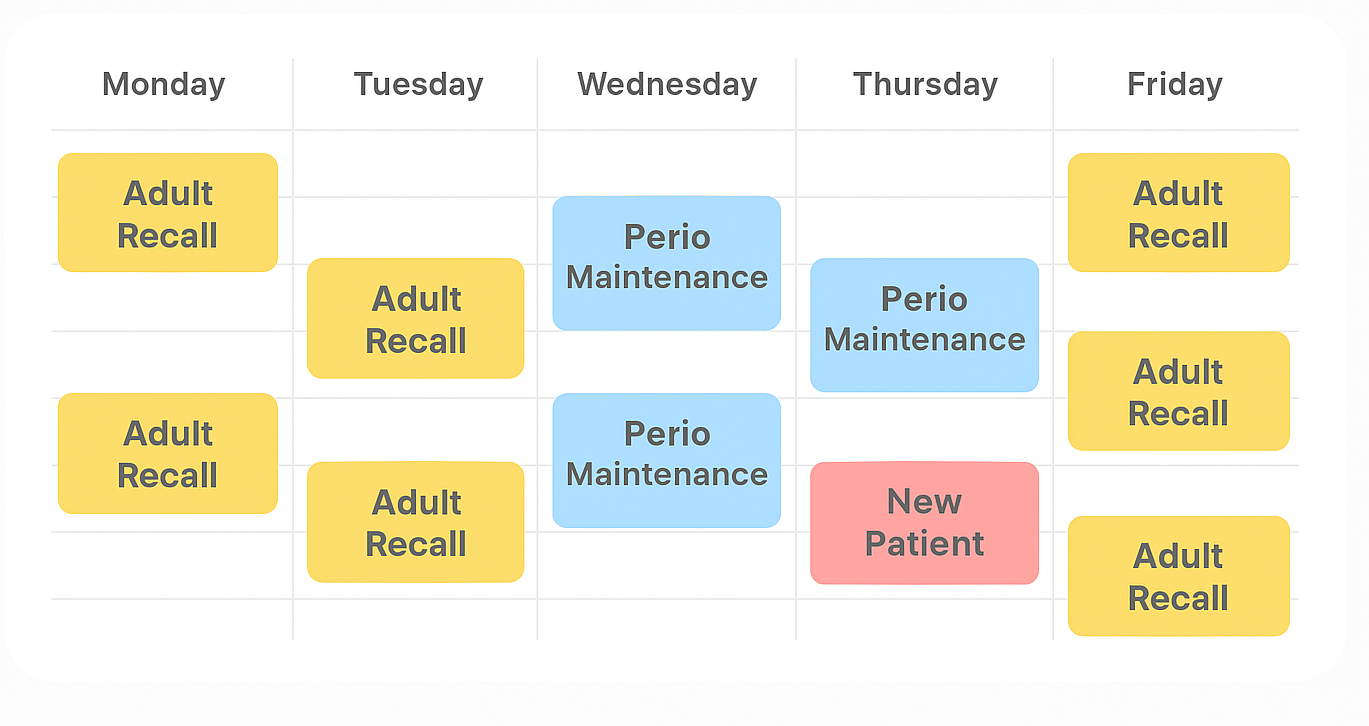
Most offices start their hygiene schedule by asking, “How many patients can we fit?” High-performing clinics ask, “How do we design each day for rhythm and revenue?”
Think Beyond One-Hour Blocks
“Different procedures require different energy and pacing — structure your day accordingly.”
Morning should focus on higher-value procedures — new patients, perio maintenance, whitening, etc.
Afternoons can be shorter recall visits, fluoride treatments, or children’s appointments.
That visual snapshot is often all it takes to reveal exactly where your profit is leaking.
Step 4: Balance Your Hygienist-to-Doctor Ratio
Even perfect schedules fail when staffing ratios don’t match patient demand
General guideline for BC practices:
1 hygienist per dentist → sustainable for up to ~2,000 active patients
2 hygienists per dentist → ideal around 2,500–3,000 active patients
Balance your team structure before optimizing your schedule — staffing ratios drive profit predictability
Find your sweet spot by calculating:
Active Patient Count ÷ Recall Frequency ÷ Available Hygiene Hours
That will tell you how many hygiene hours per week your practice can realistically fill.
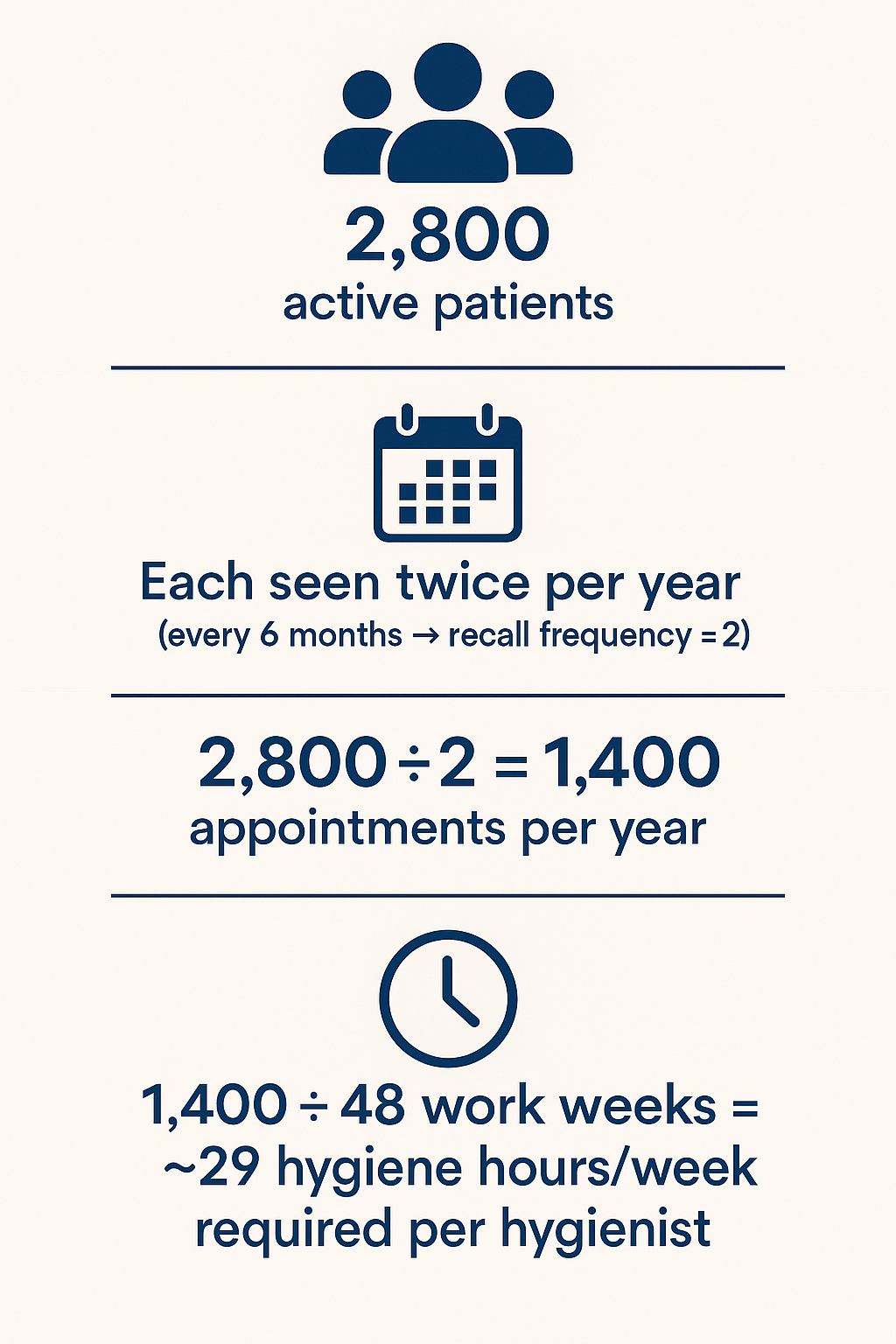
Example:
2,800 active patients
Each seen twice per year (every 6 months → recall frequency = 2)
2,800 ÷ 2 = 1,400 appointments per year
1,400 ÷ 48 work weeks = ~29 hygiene hours/week required per hygienist
So if you have 2 hygienists working 32 hours each (64 total), you’re slightly under capacity — time to grow your patient base.
Step 5: Protect Your Schedule — and Your Profit — with Flex Blocks
Even the best-planned day can fall apart when cancellations strike.
Flex blocks are your built-in insurance policy
Why Every Hygienist Needs Flex Blocks
When a patient cancels last-minute, most clinics scramble to fill the hole — losing both time and production.
Flex Blocks turn that chaos into control. Short, 30-minute pre-planned slots give your team breathing room and confidence.
How Flex Blocks Work
Add 1–2 Flex Blocks per week per hygienist.
Schedule them mid-morning & mid-afternoon (the most common cancellation times).
Treat them as reserved time, not empty space.

Use Flex Blocks For
💥Last-Minute or Emergency Patients
Quickly slot urgent care without disrupting the schedule.
🦷Quick Treatments
Use for fluoride, sealants, or desensitizing—short, profitable procedures.
🕓Catch-Up Time
Absorb delays or late arrivals smoothly.
🕓📞Same-Day Cancellations
Keep production flowing without panic.
The Result: A Calm, Predictable Day
With Flex Blocks, your front desk stops reacting and starts leading.
Your team handles surprises with confidence — maintaining production, patient experience, and profitability.
Step 6: Prevent Burnout — the Silent Profit Killer
A schedule that pushes hygienists too hard might look profitable short-term —
but it erodes consistency, morale, and retention.
Replacing a burnt-out hygienist can cost $30,000 – $50,000 in lost production, recruitment, and training.
Sustainable Scheduling Principles
🔁 Alternate quick recalls with longer perio or new-patient visits.
⏱️ Add 10–15-minute buffers between complex cases for charting & resets.
🧩 Group similar appointment types to maintain rhythm.
🌿 Run Fridays at 70–80% capacity — use it for catch-ups, emergencies, or chart reviews.

The Hidden Cost of Burnout
Beyond the numbers, burnout quietly drains your clinic of energy, consistency, and trust.
Every departure means lost patients, broken routines, and months of rebuilding
⏱️3 – 6 months
Time to regain full productivity
💸$30K – $50K
Average cost to replace a hygienist
A Calm Team Is a Profitable Team
A schedule built for balance keeps your hygienists energized, focused, and loyal.
When your team feels valued and unrushed, your patients feel it too — and your profit stays steady.
Step 7 – Track Key Metrics Weekly
If you don’t measure, you can’t manage.
Every week, review your hygiene schedule through numbers — not feelings.
Three key metrics tell you instantly if your team is on track or losing momentum.
Formula:
PPH = Total Hygiene Collections ÷ Total Hours Worked
When Utilization Dips Below 80%
Low utilization is a symptom — not the disease.
When your hygiene chairs aren’t full, look deeper.
❓ Too many short appointments?
❌ Excessive cancellations?
⚖️ Wrong appointment type mix?
Step 8 – Use Dashboards, Not Gut Feelings
Your practice management system or Stellar’s custom tracker can show every vital sign that matters.
Data replaces debate — and turns chaos into clarity.
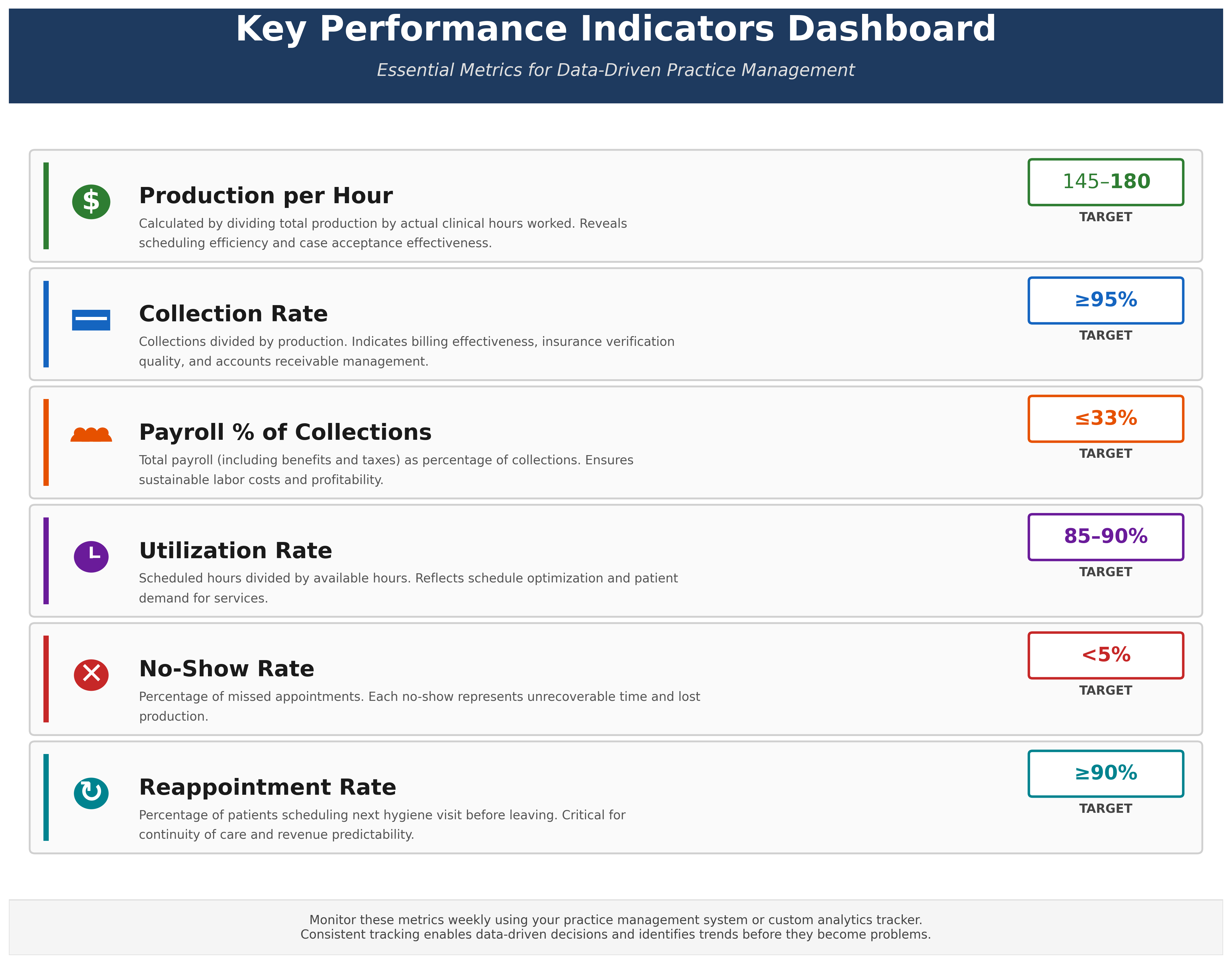
These aren’t “corporate KPIs.” They’re the pulse of your practice.
Review them monthly, and host short quarterly calibration meetings with your hygienists and front desk.
Everyone should see the link between schedule design and financial outcomes
Step 9: Create a Six-Month Implementation Plan
Change doesn’t need to be overwhelming. Roll it out gradually and measure the impact.
Consistency beats perfection. The goal isn’t to rebuild everything overnight — it’s to create small, steady improvements that compound over time.
Common Mistakes That Quietly Erode Profit
Even well-run clinics lose thousands each year from overlooked scheduling habits.
📉Ignoring reappointment rates – Anything under 85 % is a silent leak that compounds every month.
📅Treating every day the same – Mondays and Fridays consistently underperform — schedule strategically.
⏱️Never adjusting appointment lengths – Match hygiene time blocks to each provider’s true pace.
🌤️Forgetting seasonal variance – Summer hygiene patterns always differ — plan for it.
💰Failing to revise financial targets – BCDA fee updates change benchmarks — review goals annually.
💡 Fixing even one of these issues can bring immediate, measurable gains — often worth thousands in added production without a single extra patient.
The Bottom Line: Design Creates Profit
A profitable hygienist schedule isn’t luck — it’s design.
When you build around your own financial truth — not someone else’s averages — you create a system that protects profit, reduces stress, and strengthens your team.
At Stellar Accounts, we help BC dental practices connect the dots between numbers and operations — turning your schedule into a strategic financial tool.
Because your effort deserves to show up on your bottom line.
Your Next Steps
You’ve seen what’s possible when your hygiene schedule is built on data and design.
Now, take the next two steps to turn insight into measurable growth.